The Importance of Disinfecting Workspaces as Allergy Season Arrives in Rockford
Spring arrives early in the Rockford area, and with it comes a surge of tree pollen, mold spores, and wind-carried dust that settles into every corner of your building. For businesses and homeowners alike, that means sneezing employees, irritated customers, and air quality that quietly works against everyone inside.
The good news is that a targeted disinfecting and deep-cleaning plan can make a real difference. Here is what you need to know before allergy season hits full stride.
Why Rockford Allergy Season Is Especially Tough on Indoor Spaces
Rockford sits in northern Illinois, where spring pollen season typically begins in late March with tree pollens from oak, birch, and maple. By May, grass pollens take over. The region also sees significant temperature swings that encourage mold growth indoors, especially in spaces with any humidity issues.
Every time a door opens, pollen hitchhikes inside. It lands on desks, carpet fibers, HVAC vents, and upholstered furniture. Once settled, it does not go away on its own.
The Hidden Sources of Indoor Allergens
Most people think of outdoor air as the problem, but indoor air quality is often worse. Common culprits inside commercial buildings and homes include:
- Dust mites live in carpet, upholstery, and fabric partitions
- Pollen tracked in through foot traffic and HVAC intake vents
- Mold spores are developing in break rooms, restrooms, and storage areas
- Pet dander in pet-friendly offices or residential spaces
- Accumulated dust on light fixtures, ceiling tiles, and above-door frames
These particles circulate every time the heating or cooling system kicks on, spreading allergens throughout the entire space repeatedly throughout the day.
Warning Signs Your Space Has an Air Quality Problem
You may not see allergens, but you will notice the effects. Watch for these signs that your indoor environment needs attention:
- Employees or visitors frequently sneeze or experience watery eyes indoors
- A musty or stale odor that does not clear after ventilation
- Visible dust buildup on vents, shelving, or baseboards
- Increased sick days or complaints of headaches and fatigue among staff
- Allergy symptoms that improve when people leave the building
That last point is a strong indicator. If people feel better outside than inside, the building itself is the source of the problem.
The Risks of Ignoring Seasonal Allergens in the Workplace
Beyond personal discomfort, poor indoor air quality carries real business consequences. Reduced concentration and productivity are well-documented effects of allergen exposure. Employee absenteeism rises when allergy symptoms go unaddressed.
For businesses that serve customers or clients in their space, a dusty or musty environment also sends the wrong message about your standards. First impressions matter, and indoor air quality is part of that impression.
What Proper Disinfecting and Deep Cleaning Actually Involves
A standard nightly wipe-down is not enough during allergy season. Effective allergen control requires a more thorough approach, including:
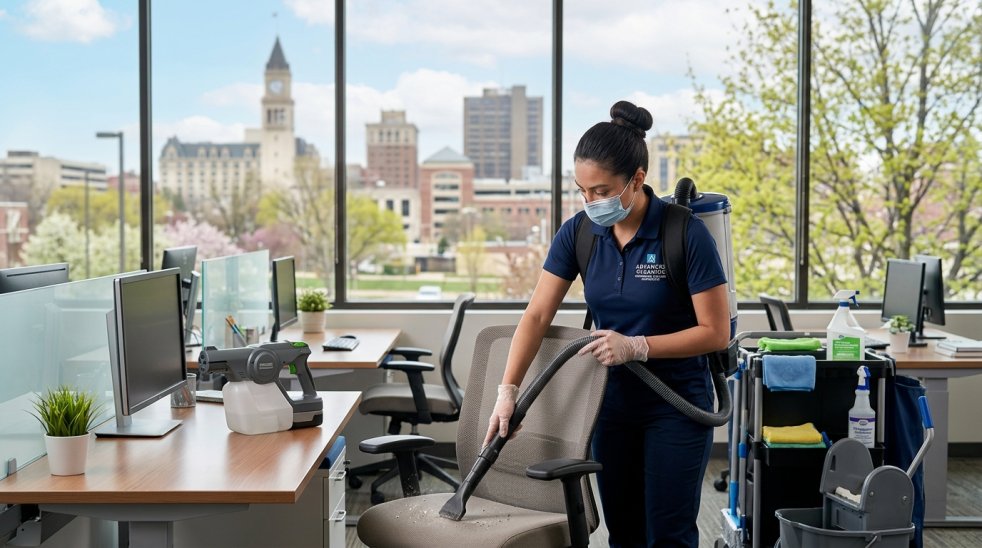
- HEPA-filtered vacuuming of all carpet, fabric surfaces, and upholstered furniture
- Detailed dusting of vents, ceiling fans, light fixtures, and high horizontal surfaces
- Disinfecting of high-touch surfaces where pollen and dust collect (keyboards, door handles, counters)
- Cleaning and wiping down HVAC vent covers and return air grilles
- Restroom and break room deep cleaning to address mold-prone areas
- Entryway and mat cleaning to reduce tracked-in pollen at the source
Frequency matters too. During peak pollen months in Rockford, increasing your cleaning schedule from weekly to two or three times per week can significantly reduce allergen load in your space.
What You Can Do Between Professional Cleanings
There are practical steps any business or homeowner can take to keep allergens under control between visits from a cleaning crew.
- Change HVAC filters monthly during spring and fall, and use filters rated MERV 11 or higher
- Keep windows closed on high pollen count days (check the Rockford area forecast through the National Allergy Bureau)
- Use a doormat system at every entrance and ask staff to wipe shoes thoroughly
- Avoid dry dusting, which just redistributes particles into the air
- Run an air purifier with a HEPA filter in high-traffic rooms
These steps help, but they work best as a complement to professional cleaning, not a replacement for it.
Let a Local Expert Handle the Heavy Lifting
Allergy season does not have to mean weeks of sneezing and sluggish productivity. A consistent, professional cleaning routine targeted at the specific allergen sources in your building makes a measurable difference for everyone who spends time there.
Advanced Cleaning serves businesses and properties throughout the Rockford, IL area with commercial cleaning services designed to improve your indoor environment all year long. Call us today at (815) 261-0701 to schedule a consultation and get ahead of allergy season before it peaks.